Exploring Gotham Greens' Role in Urban Agriculture

Intro
Urban agriculture has seen remarkable changes in recent years, driven by innovations in technology and sustainable practices. One standout player in this space is Gotham Greens, a company that has started to transform how we produce food in cities. As urban areas become more crowded, the challenges related to food production and sustainability also grow. Gotham Greens presents a model that combines hydroponics, a method that involves growing plants without soil, with sustainable practices to meet these challenges head-on.
Gotham Greens is not just about growing leafy greens; it's about growing towards a future where food production can exist harmoniously within city limits. Their initiatives deliver fresh produce while reducing the carbon footprint normally associated with conventional farming. This article will delve into how Gotham Greens is reshaping urban agriculture through innovative techniques, tackling food security issues, and enhancing community engagement.
Research and Data Analysis
Latest Trends in Agriculture and Horticulture
The agricultural landscape is evolving rapidly, with urban farming at the forefront of discussions surrounding food security and sustainability. Hydroponics and vertical farming technologies are gaining traction, stimulating interest in efficiency and yield maximization. By growing food closer to consumers, companies like Gotham Greens are not just reducing transportation emissions but also offering fresher produce. The synergy between urban agriculture and smart logistics is intriguing, creating a loop of sustainability that benefits both the environment and local economies.
- Hydroponics: This method allows for higher crop yields in a smaller space. Gotham Greens utilizes these systems extensively, ensuring plants receive nutrients directly to their roots.
- Vertical Farming: Using limited square footage, vertical systems let crops grow upwards. This efficiency is perfect for tight urban settings, where every inch counts.
Statistical Insights into Crop Yields
Recent studies indicate that hydroponically grown crops can yield up to two to three times more than traditional soil-grown plants in a similar timeframe. Gotham Greens' techniques are often cited in research highlighting the benefits of pursuing local produce systems.
"Urban farms can produce food twenty times more efficiently than traditional farms on a per acre basis.”
Feeding the growing urban population is no small feat. With cities projected to house about 68% of the world's population by 2050, understanding the data behind crop yields becomes crucial.
Best Practices and Techniques
Effective Crop Management Strategies
Crop management is at the heart of any farming operation. Gotham Greens embraces several key practices:
- Integrated Scheduling: By planning planting and harvesting times meticulously, they maximize space usage and maintain a consistent supply of greens.
- Monitoring Technology: Real-time data tracking systems help to monitor nutrient levels and plant health, allowing for timely interventions.
Sustainable Horticultural Techniques
The sustainability focus permeates through every aspect of Gotham Greens. Some of their techniques include:
- Water Conservation: Hydroponics uses up to 90% less water than traditional farming.
- Pesticide-Free Growth: Emphasizing natural pest management, they prioritize biological controls over chemical pesticides, ensuring the produce is clean.
Pest and Disease Management
Common Pests and Diseases in Crops
Urban farming does not come without its own set of challenges, particularly concerning pest management. Common pests like aphids and spider mites can be persistent adversaries for crop producers.
Integrated Pest Management Strategies
Gotham Greens leans heavily on integrated pest management (IPM) strategies that incorporate:
- Culture Practices: Adjusting plant spacing and choosing resistant cultivars helps prevent infestations.
- Monitoring and Intervention: Regular pest monitoring allows for early detection and intervention, reducing the need for drastic measures that could impact the environment.
By adopting such strategies, Gotham Greens not only aims for high yields but reinforces their commitment to sustainable practices that resonate with eco-conscious consumers.
Through these discussions, it becomes clear that the impact of Gotham Greens goes beyond just food production; it is a comprehensive approach to enhancing urban living with sustainable agricultural methods. Their work sets a robust precedent for future urban agriculture initiatives, proving that cities can indeed be places of growth, both in a literal and metaphorical sense.
For more information on urban agriculture trends, visit Wikipedia or the USDA.
Overview of Gotham Greens
Understanding Gotham Greens is crucial to grasping the evolving narrative of urban agriculture. As an innovative player in this field, the company has redefined how we think about food production within city limits. Not only does it advocate for sustainable practices, but it also shifts the paradigm of local food systems, emphasizing their relevance amid increasing urbanization.
The benefits of having a company like Gotham Greens in urban settings are extensive.
- Local Food Availability: By establishing rooftop farms, Gotham Greens shortens the supply chain. Consumers can get fresh produce harvested just hours earlier, enhancing the quality and taste.
- Environmental Impact: Their hydroponic systems use significantly less water compared to traditional farming, promoting resource conservation in densely populated areas.
- Community Engagement: Gotham Greens’ initiatives offer educational opportunities and assist in community nutrition programs, making fresh produce more accessible to urban populations.
However, this overview also brings attention to considerations that underpin Gotham Greens’ operations, such as scalability and the long-term sustainability of urban farming. Understanding these factors is essential for both enthusiasts and farmers alike who may consider adopting similar approaches.
Gotham Greens champions the idea that growing food does not need to be restricted to rural areas, paving the way for a new age of agriculture that is as urban as it is innovative.
In recognition of the path laid out by Gotham Greens, we can further delve into their foundational aspects, which provide vital context to their extraordinary journey.
Intro to the Company
Founded in 2009, Gotham Greens is not just a company; it is a reflection of new-age agricultural practices aimed at addressing the issues prevalent in today’s urban food deserts. Their mission extends beyond growing greens; it encompasses a grassroots movement to enhance food systems. This perspective is particularly resonant given the increasing challenges of climate change and urban population growth.


As a pioneer in urban agriculture, Gotham Greens employs advanced hydroponic techniques, showcasing the vital intersection of technology and agriculture. The company's approach simplifies food procurement, embeds sustainability in its model, and introduces healthy, locally-sourced options to urbanites.
Founding and Growth
The story of Gotham Greens begins with a vision to transform urban landscapes into green spaces, primarily led by co-founders Viraj Puri and Gretchen Schmidhofer. Their initial venture, launching a rooftop greenhouse in Brooklyn, changed the game. Right from the start, they embraced innovative farming methods, utilizing hydroponics, which allows for high-density crop production without soil, proving ideal for the limited space available in urban environments.
Since its inception, Gotham Greens has experienced remarkable growth. They expanded from their first greenhouse to multiple facilities across the U.S., now producing millions of pounds of greens annually. This expansion is not just a testament to their successful business model; it highlights a growing consumer demand for local, fresh produce.
The company does not merely aim for profitability; it seeks to alter food production narratives. Gotham Greens reinforces local economies while tackling food insecurity, offering job opportunities and fresh produce to underserved communities.
This blend of innovation, entrepreneurship, and community focus serves as a blueprint for aspiring urban farmers.
Hydroponic Farming Techniques
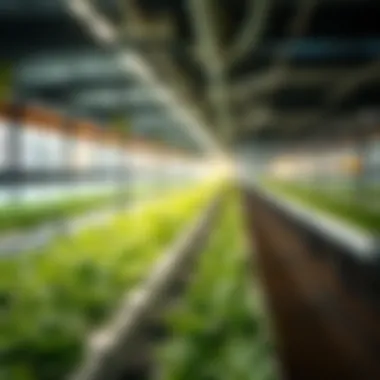
Hydroponic farming, a method that enables the growth of plants without soil, has changed the way we think about agriculture, particularly in urban contexts. This is crucial for understanding Gotham Greens, as their non-traditional approach to farming not only enhances plant growth but also addresses significant urban challenges. Hydroponics provides a solution to space constraints and soil degradation while allowing for local food production that is less dependent on long supply chains. The benefits of hydroponic farming extend beyond mere production rates; they include water conservation, higher yields, and the ability to grow fresh produce year-round.
Principles of Hydroponics
The foundation of hydroponics lies in its ability to deliver nutrients directly to plants through water solutions. This eliminates the need for soil, which can be particularly advantageous in urban areas where adequate farmland is scarce. Moreover, hydroponics can be tailored to suit various types of plants by adjusting nutrient levels and environmental conditions. The main principles include:
- Nutrient Solutions: Plants obtain sporadic nutrients from water infused with essential minerals, ensuring they receive everything they need directly.
- Growth Mediums: While no soil is involved, various inert media such as clay pellets, rock wool, or coconut coir can be used to anchor the plants.
- Water and Oxygen Management: Managing both the hydration levels and oxygen supply to roots is vital, as these factors determine overall plant health and growth.
Hydroponics allows for superior control over growing conditions, drastically reducing the chances of pests and diseases which often plague traditional agriculture.
Gotham Greens' Approach
System Design
Gotham Greens employs a meticulously crafted hydroponic system designed to maximize space and yield. Their vertical farming setups utilize stacked layers of crops, which significantly optimize land use in urban areas. One remarkable characteristic of their system design is the use of controlled environments, which allow for consistent crop output regardless of external weather. This adaptability makes it a beneficial selection for urban environments. The integrated technologies, such as climate control and automated nutrient delivery, enhance growth rates while minimizing wastage of resources.
Crop Selection
The choice of crops at Gotham Greens reflects a strategic aim to meet consumer demands while also ensuring high profitability. They focus on leafy greens like lettuce, herbs like basil, and some other select vegetables, which tend to grow swiftly and have a shorter harvest cycle. One of the key aspects of their crop selection strategy is the prioritization of high-value crops that yield benefits both nutritionally and economically. However, while the focus on fast-growing crops presents advantages, it can also limit the diversity of produce offered, potentially leaving some consumer preferences unmet.
Yield Optimization
Yield optimization is about more than just increasing the quantity of harvest; it's also about improving the quality of produce. Gotham Greens employs various techniques, such as precision farming and variable rate applications, which facilitate tailored nutrient delivery to plants based on their specific growth stages. The unique feature of their yield optimization strategy is the use of data analytics, which equips them to predict and adjust farming tactics to achieve maximum output. Still, balancing yield and quality remains a challenge, especially with changing consumer preferences for organic and sustainably grown products.
Sustainability Practices
Gotham Greens has made a mark in urban agriculture not just through its innovative farming methods, but by championing sustainability practices that resonate throughout their operations. The emphasis on sustainability is crucial in today’s world, where environmental concerns loom large. By integrating sustainable practices into their business model, Gotham Greens stands as a beacon for what urban agriculture can achieve. This section delves into the key facets of their sustainability framework, exploring how resource efficiency, waste management strategies, and energy use contribute to a more resilient food system in urban environments.
Resource Efficiency
At the heart of Gotham Greens’ approach is the concept of resource efficiency, which refers to the optimal use of inputs to produce outputs. Their hydroponic farms, located on rooftops and repurposed spaces, utilize significantly less water than traditional farming methods—a staggering 90% less in some cases. This is achieved through a closed-loop irrigation system that recycles water, minimizing waste and ensuring that every drop counts.
In addition to water, Gotham Greens is mindful of land use. By utilizing urban rooftops for farming, they transform otherwise wasted spaces into productive agricultural hubs. This not only reduces food miles—contributing to lower greenhouse gas emissions—but also supports localized food production, fostering a sustainable community-centric food system. By emphasizing resource efficiency, Gotham Greens not only enhances their productivity but also sets a standard for other urban farmers to follow.
Waste Management Strategies
Waste management is often a significant challenge in urban settings, where space is at a premium. Gotham Greens tackles this by incorporating robust waste management strategies within their operations. For instance, they employ composting techniques to process organic waste, returning nutrients back into the soil. This reduced waste footprint is an essential part of their mission to sustain urban agriculture while minimizing environmental impact.
Additionally, Gotham Greens partners with local businesses and community organizations to repurpose food scraps and packaging waste. Collaborating with other stakeholders amplifies their impact while promoting a circular economy that benefits not just their operation, but the community and local ecosystems as well. This proactive stance on waste management exemplifies how urban agriculture can play a role in fostering sustainable practices in diverse communities.
Energy Use and Carbon Footprint
Energy consumption and its related carbon footprint are pressing issues for urban agriculture. Gotham Greens has adopted innovative technologies, such as energy-efficient LED grow lights, which consume less energy while providing the necessary light spectrum for plant growth. Through these means, they significantly lower their overall energy consumption, making strides towards reducing their carbon emissions.
Furthermore, their facilities are designed with sustainability in mind. By using renewable energy sources like solar panels and engaging in energy-efficient designs, Gotham Greens minimizes its environmental impact while also demonstrating that urban agriculture can be both productive and eco-friendly. The ongoing commitment to reducing energy usage displays their understanding that every bit counts when it comes to environmental stewardship.
"Sustainability is not a goal; it's a mindset. Gotham Greens embodies this through every step of their operations, shining a light on the significance of resourcefulness in urban farming."
In summary, the practices of resource efficiency, waste management, and energy use underscore Gotham Greens’ commitment to sustainability. As urban agriculture continues to evolve, their model not only serves as a template for other enterprises but importantly contributes to the broader goal of a healthier planet.
Addressing Food Security
Food security stands as a cornerstone for thriving communities, particularly in urban settings where access to fresh, nutritious food can be fragmented. Gotham Greens plays a pivotal role in mitigating food insecurity by harnessing innovative agricultural practices tailored for city environments. By prioritizing local food production through hydroponic systems, the company not only elevates food supply but also enriches the community's relationship with food.
In essence, tackling food security is a call to action—an opportunity to enhance local agricultural systems, cut down transportation emissions, and improve the resilience of food supply chains. By removing barriers to freshness, Gotham Greens exemplifies how urban agriculture can deliver direct benefits, including improved nutrition and economic vitality. This approach demonstrates that cities can produce their own food efficiently, ultimately fostering self-sufficient ecosystems.
Local Food Production
Gotham Greens’ commitment to local food production serves as a beacon of hope for urban communities. Their rooftop farms encompass the landscape of densely populated areas while providing an alternate food source that thrives independent of traditional agriculture.
With a keen focus on the production of leafy greens such as lettuce and herbs, Gotham Greens employs methods that enable year-round cultivation, irrespective of seasonal limitations. This not only results in fresher produce on consumers’ plates but also minimizes the carbon footprint associated with transporting food from distant farms.
- Benefits of Local Food Production:
- Reduced transportation costs
- Enhanced seasonal variety of produce
- Greater access to nutrient-rich food options
Community Nutrition Initiatives
The initiatives devised by Gotham Greens extend far beyond crop production; they aim at nourishing communities holistically. Recognizing that food insecurity often intertwines with health disparities, the company has launched several community nutrition programs designed to educate and empower urban residents.
By collaborating with local organizations, Gotham Greens promotes workshops that focus on healthy eating, cooking demonstrations, and sustainable agriculture practices. This empowers individuals with the skills and knowledge needed to make informed food choices.
"Education is everything when we talk about health and wellness. Knowing how to cook with fresh produce can change lives."
The connection between community and food is deepened through these initiatives, as Gotham Greens demonstrates its commitment to fostering not just sustainability but also a well-informed populace capable of engaging with their food systems.
In summary, through local food production and community nutrition initiatives, Gotham Greens tackles food security head-on. These strategies are vital not only in providing immediate relief but also in establishing a foundation for long-term resilience and health within urban communities.
For more information on food security and urban agriculture practices, consider visiting resources like Wikipedia's Food Security or USDA.
Technology in Urban Agriculture
The role of technology in urban agriculture has gained momentum, akin to a sprout breaking through the concrete of a bustling city. This reliance on technological advancements has become a game-changer for urban farmers, particularly enterprises like Gotham Greens. Not only does technology promote efficiency, it also addresses some of the inherent challenges of farming within an urban landscape.
Benefits of Technology in Urban Agriculture:
- Increased Efficiency: Modern farming techniques, such as hydroponics and vertical farming, leverage space and resources more effectively. This is crucial in urban settings where land is often a premium.
- Waste Reduction: Smart technologies can track usage patterns and help mitigate waste—another critical issue in urban farming.
- Scalability: Technologies allow urban farms to scale operations without needing significant additional land, making expansion feasible and less daunting.
- Improved Crop Quality: Automation and precision agriculture will enable farmers to produce healthier, higher quality crops that better satisfy the local demand.
While the benefits of technological integration are evident, there are notable considerations that must be addressed. The cost of implementation can be high, and many urban farmers might need guidance or additional training to effectively use these technologies. However, organizations like Gotham Greens are pioneering these advancements, demonstrating that the initial investment can yield substantial returns.
Use of Smart Technologies
Gotham Greens employs various smart technologies to optimize their farming processes. This implementation is not without its intricacies; understanding the nuances can illuminate why smart tech is indispensable in urban settings.
Key Smart Technologies in Use:
- IoT Sensors: These devices monitor environmental factors such as temperature and moisture levels, providing real-time data that farmers use to make informed decisions.
- Automated Systems: Automation allows for tasks like irrigation and nutrient delivery to be conducted with minimal human intervention, freeing up labor resources for more strategic roles.
- Data Analytics: The utilization of software to analyze crop performance can help identify the best practices for each type of plant, offering valuable insights that traditional methods might overlook.
By adopting smart technologies, Gotham Greens not only streamlines its operations but also sets a benchmark for the urban agriculture sector, demonstrating how data-driven decisions can lead to tangible results.
Innovation in Crop Management
Innovation in crop management is vital for urban farms to thrive sustainably. Gotham Greens has made leaps and bounds in redefining how crops are cultivated and managed.
Innovative Practices:
- Crop Rotation: They utilize crop rotation methods to maintain soil health and prevent pest build-up while maximizing yield.
- Integrated Pest Management (IPM): By employing IPM strategies, they reduce reliance on harmful pesticides, ensuring healthier crops for consumers and a safer environment.
- Vertical Farming: This technique allows them to maximize space while ensuring adequate light and air reach each plant. It's this form of innovation that enables them to produce fresh greens even in confined urban settings.
"Innovation isn’t just about creating new products; it’s about continuously redefining processes and practices to improve efficiency and productivity."
Urban agriculture’s success largely hinges on such forward-thinking crop management strategies. Gotham Greens demonstrates that effective crop management is not merely about what is grown but also how it is cultivated and cared for in the context of an urban environment.
With technology and innovation forefront in urban agriculture, Gotham Greens stands as a formidable force in transforming city landscapes into sustainable farming zones, effectively bridging the gap between rural production and urban consumption.
For further reading on urban agriculture technology advancements, check out resources from Wikipedia and Britannica.
Explore community discussions on Reddit and consider checking out agricultural insights from educational domains like *.edu.
This interconnectedness of technology and innovative practices heralds a bright future for urban agriculture, showing that with the right tools and knowledge, even the most crowded metropolis can cultivate its own green revolution.
Challenges in Urban Farming
Urban farming, while celebrated for its innovative approaches and ability to enhance local food production, isn’t without its share of hurdles. The success of operations like Gotham Greens in urban environments highlights not just the triumphs, but the pressing challenges that need tackling. Understanding this duality is essential for anyone invested in the field, as urban farmers navigate a landscape fraught with regulatory complexities and competitive pressures.
Regulatory Hurdles
Navigating the web of regulations can be a real minefield for urban farming initiatives. Local zoning laws, health regulations, and environmental policies often create a challenging landscape for innovators. For instance, Gotham Greens, when establishing its hydroponic farms, had to address various requirements ranging from building permits to health inspections. One such example is New York City's stringent regulations on food safety and production standards that must be adhered to more so when cropping in private or community spaces.
Farmers must equip themselves with a solid understanding of the legal framework governing their operations. This includes, but isn’t limited to:
- Zoning Laws: Restrictions on where farming activities can take place.
- Building Codes: Guidelines to ensure structures are safe and suitable for agricultural use.
- Health Regulations: Standards ensuring that food safety is not compromised during production and distribution.
These aspects can lead to increased costs and time delays, sometimes stifling creativity and innovation where they are needed most. Furthermore, such regulations vary significantly from one city to another, complicating the efforts of farmers wishing to expand or replicate their models elsewhere.
"Understanding local laws is just as crucial as understanding the farming methods. Without compliance, urban farms risk their very existence."


Market Competition
With the rising interest in local food production, competition is fierce among urban farms. Gotham Greens contends not just with traditional farms, but also with myriad new entrants and tech-driven agro start-ups. As urban agriculture gains traction, farmers face increasing competition to secure market share, whether through direct sales at farmer's markets or partnerships with grocery chains.
Notably, several factors can impact the competitive landscape:
- Price Pressure: When multiple farms are vying for the consumer dollar, price wars can ensue, potentially undermining profits.
- Quality Differentiation: With many players, establishing a unique value proposition becomes critical to staying ahead in the market.
- Consumer Trends: Evolving consumer preferences towards organic and locally sourced products may shift focus in unexpected directions, impacting sales for those stuck in the past.
Moreover, the scalability of an operation also plays into competition. Firms like Gotham Greens may have the upper hand with their advanced technology and efficient processes, making it challenging for smaller farms without such resources.
The Role of Education and Advocacy
Education and advocacy are vital components in shaping the future of urban agriculture, especially in the context of Gotham Greens. In an era where food security and sustainability are at the forefront of global discussions, organizations like Gotham Greens take on a significant responsibility to engage with communities. They provide essential knowledge and resources that empower individuals to understand and participate in the movement towards sustainable food systems.
Community Outreach Programs
Community outreach programs form the backbone of Gotham Greens’ educational efforts. These initiatives aim to foster a deeper connection between the company and the neighborhoods in which they operate. By understanding local food preferences, cultural practices, and nutritional needs, Gotham Greens can tailor its offerings effectively.
A few notable examples of these programs include:
- Farm Tours: These tours not only educate participants about hydroponics but also showcase the complexities of urban farming. They provide a hands-on approach, guiding visitors through the cultivation processes and highlighting the impact of local farming on the environment.
- School Partnerships: Collaborating with local schools allows Gotham Greens to promote agricultural literacy among younger generations. Through interactive sessions, students learn about plant growth, nutrition, and environmental stewardship, fostering early interest in sustainable practices.
- Collaborative Events: Partnering with local organizations enables Gotham Greens to participate in food drives and farmers' markets, where they can further disseminate knowledge about their farming practices and the benefits of local produce.
"The goal of community outreach is not just to inform, but to involve. When people participate actively, they become advocates for change within their own circles."
Workshops and Training Initiatives
Workshops and training initiatives represent another facet of education that Gotham Greens prioritizes. These sessions are designed to equip urban farmers and enthusiasts with essential skills for sustainable agriculture. The hands-on nature of these workshops ensures that participants leave with practical knowledge they can apply immediately.
Some key elements of these workshops include:
- Crop Management Techniques: Participants learn effective methods for managing crops in urban settings. This includes understanding specific plant requirements, pest management strategies, and the benefits of hydroponics.
- Sustainability Practices: Education about sustainable practices helps individuals understand not only the environmental impact of agriculture but also its economic benefits. Workshops emphasize waste reduction and energy-efficient practices that can be adopted at home or in small-scale farms.
- Seasonal Planting: Understanding when and how to plant various crops enhances food security. Gotham Greens educates the community about seasonal cycles, encouraging local farming throughout the year to optimize produce availability.
Incorporating educational content in these workshops goes beyond practical skills; it instills a sense of community and shared responsibility among participants. By learning together, individuals can build networks that support local agriculture and contribute to a broader movement towards sustainability.
By prioritizing education and advocacy, Gotham Greens not only fosters informed consumers but also cultivates a community of advocates ready to support and elevate urban agriculture.
Future Prospects of Gotham Greens
The future outlook for Gotham Greens holds substantial weight not just for the company, but for the entire domain of urban agriculture in which it plays a crucial role. As cities continue to grow and the need for sustainable food systems becomes more pressing, the potential expansion and evolution of Gotham Greens can set a precedent for similar enterprises. The company’s trajectory is aimed at enhancing local food accessibility, marrying traditional agricultural practices with innovative methods.
Expansion Plans
Gotham Greens has its sights set on expanding its footprint significantly in the coming years. They've identified key urban environments ripe for development and are planning to increase the number of greenhouse facilities. Specifically, markets in cities like Chicago, San Francisco, and Baltimore are of interest, where fresh produce demand outstrips local supply.
- Geographic Expansion: Targeting new urban centers not only meets local food needs but also reduces transportation impacts, which aligns with their sustainability mission.
- Production Scaling: By leveraging advanced hydroponic systems and vertical farming techniques, Gotham Greens aims to boost output while ensuring the quality remains top-notch.
Moreover, they are considering collaborations with local grocery chains to widen their reach. This partnership approach helps to build a stronger community connection and enhances brand visibility. As more stores tap into the demand for local, fresh produce, Gotham Greens stands to benefit from this growing trend.
Research and Development Focus Areas
Research and development remain at the core of Gotham Greens' strategy for growth. By investing in R&D, they've been able to refine their systems and stay ahead of the curve. Here are some key areas they are focusing on:
- Crop Variety Innovations: Exploring new crop varieties that thrive in urban settings is vital. This includes not only leafy greens but also fruits and herbs that appeal to diverse consumer preferences.
- Technological Advancements: Continued investment in smart technologies, such as AI for crop monitoring and resource management systems to optimize energy use, is essential. This aligns with the broader goal of reducing the carbon footprint of urban farming.
- Sustainability Techniques: Researching better waste management practices and eco-friendly pest control methods can further reduce the environmental impact of urban farms. Sustainable practices are crucial as more urban growers emerge on the scene.
In a nutshell, Gotham Greens is not just in the business of growing food; they are cultivating a pathway for the future of urban agriculture. Their plans for geographical and technological growth reflect a deep understanding of both market needs and environmental responsibility. As these prospects unfold, they may serve as a blueprint for addressing the ever-increasing demands of sustainable urban living.
"The actions taken today in urban agriculture could shape the food landscape for generations to come."
With that, it’s clear that as Gotham Greens evolves, the implications of their strategies will echo beyond their own operations, influencing the larger agricultural community and setting standards for sustainable practices.
The End
Summarizing Key Findings
In examining Gotham Greens, several key insights emerge that underline their influence in the field of urban agriculture:
- Hydroponic Techniques: They utilize sophisticated hydroponic systems that maximize yields while minimizing the use of land and water. This approach supports urban farmers in cities where farmland is scarce.
- Sustainability Practices: Their commitment to sustainability is evident in their efficient use of resources and waste management strategies. Beyond just growing food, they are advocates for fostering environmental stewardship.
- Community Engagement: Gotham Greens actively promotes nutrition initiatives, focusing on improving access to fresh produce. This not only elevates the community’s health but also encourages local involvement and education around agriculture.
- Education and Advocacy: Through workshops and community outreach programs, they equip individuals with the knowledge to grow their own food, further reinforcing the significance of local production systems.
These findings paint a clear picture of how Gotham Greens sets a standard for urban agriculture, particularly in densely populated areas. Their operational model is a template for other urban farms seeking to replicate their success.
Call to Action for Urban Agriculture
As we reflect on the contributions of Gotham Greens, it becomes paramount that urban agriculture is not merely viewed as a trend, but as a necessity for future food security.
Urban dwellers are encouraged to:
- Support Local Initiatives: Engage with local farms and buy produce that is grown in communities. This fosters a cycle of sustainability.
- Get Involved in Education: Participate in workshops or training offered by urban farms. Learning about sustainable practices can empower individuals to grow their own food.
- Advocate for Policies Supporting Urban Agriculture: Push local governments to create policies that facilitate the establishment of urban farms or improve access to agricultural resources.
In essence, the narrative of Gotham Greens serves as a rallying cry for individuals and communities. By adopting sustainable practices and encouraging local food systems, we can work towards a future where access to food is equitable and environmentally sustainable. Let’s cultivate cities that not only nourish bodies but also foster healthy ecosystems.